
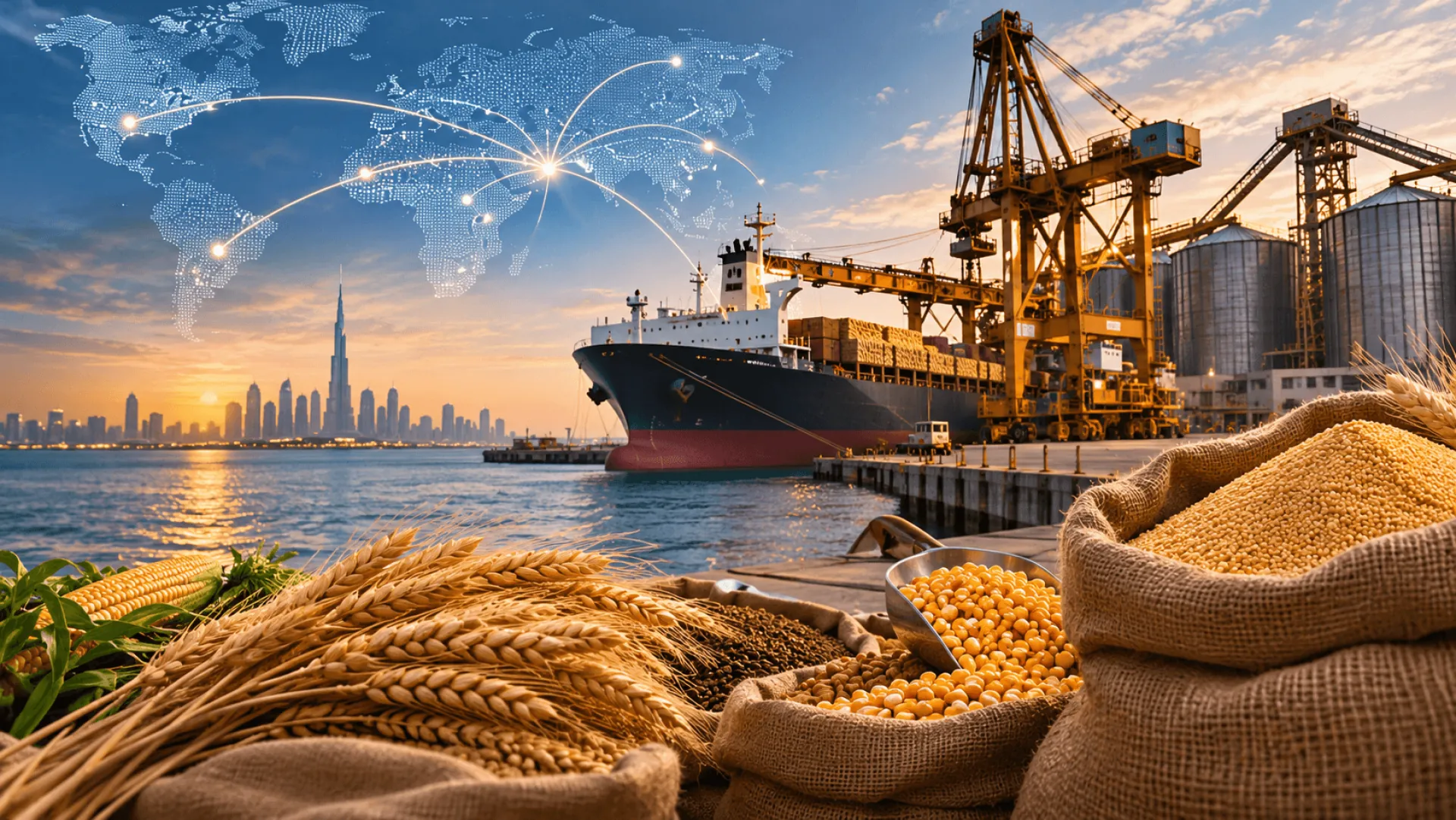

Why Wheat Is More Than an Agricultural Commodity
Oil powers industries, natural gas heats cities, and critical minerals support modern technology. But another commodity quietly influences global economic stability and international relations: wheat.
As one of the world's most widely consumed staple grains, wheat plays a fundamental role in food security, agricultural trade, and national economic planning. For countries dependent on wheat imports, access to reliable supplies is not simply a commercial consideration. It is a strategic necessity.
In 2026, global wheat production and international wheat trade remain closely connected to geopolitical developments, climate conditions, supply chain disruptions, and diplomatic relationships.
The influence of wheat extends far beyond agricultural markets. From Russia's growing presence in global grain exports to Egypt's dependence on imported wheat, this essential commodity helps shape economic partnerships and strategic relationships between nations.
Global Wheat Production: Who Produces the World's Wheat?
Global wheat production exceeds 800 million metric tonnes annually, making wheat one of the most important agricultural commodities in international markets.
According to estimates from the United States Department of Agriculture (USDA), global wheat production for the 2025/26 marketing year reached approximately 844 million metric tonnes.
The world's major wheat producers include:
-
European Union: A major producer and exporter supplying domestic and international markets.
-
China: One of the largest wheat producers, with most production consumed domestically.
-
India: A major producer whose wheat output primarily supports its large domestic population.
-
Russia: A leading wheat producer and the world's largest individual wheat exporter.
-
United States: A significant producer and established supplier to international grain markets.
-
Canada: A major exporter known for high-quality wheat varieties.
-
Australia: An important supplier serving Asian and Middle Eastern markets.
However, one important distinction defines the global wheat market: the largest wheat producers are not necessarily the largest wheat exporters.
China and India produce enormous quantities of wheat but consume most of their harvests domestically. Meanwhile, Russia, Canada, Australia, the United States, and the European Union contribute significantly to international wheat supplies.
This difference between production and export availability creates a global market in which relatively few exporting countries play a major role in feeding import-dependent populations.
How Global Wheat Trade Influences International Relations
International wheat trade is not merely about selling agricultural products. It creates economic connections that can influence diplomatic engagement, bilateral cooperation, and long-term strategic relationships.
Countries that consistently export wheat to major importing nations become important participants in those nations' food supply chains.
For importing governments, maintaining stable relationships with agricultural suppliers can therefore become an economic and diplomatic priority.
Three factors make wheat particularly significant in international relations:
Food security: Wheat is a staple food for billions of people, making reliable supplies essential for economic and social stability.
Trade dependence: Countries with limited agricultural production must maintain access to international wheat markets.
Supply chain concentration: A disruption affecting a major exporting region can influence prices and availability across multiple importing countries.
As a result, wheat-producing countries can develop commercial influence that extends beyond the agricultural sector.
Russia's Wheat Exports and Their Geopolitical Influence
Russia provides one of the most prominent examples of how agricultural commodities can contribute to geopolitical influence.
Over the past two decades, Russia has expanded its position in international wheat markets, becoming the world's largest individual wheat exporter.
Russian wheat supplies numerous countries across the Middle East, North Africa, and Asia, where demand for imported grain remains substantial.
Egypt is a particularly important example.
As one of the world's major wheat importers, Egypt relies on international suppliers to support domestic consumption and its bread subsidy system. Russian wheat has historically been attractive because of competitive prices, large export volumes, and relatively favourable shipping distances through the Black Sea.
These commercial relationships create economic interdependence between exporters and importers.
Although wheat purchases do not automatically determine political alignment, they can encourage continuous diplomatic engagement and strengthen long-term bilateral economic relationships.
For Russia, wheat exports represent both an important source of agricultural revenue and a means of maintaining commercial connections with international markets.
For importing countries, the priority is securing affordable and dependable supplies without becoming excessively reliant on a single exporter.
Ukraine, the Black Sea, and Global Wheat Supply Chain Disruptions
The conflict in Ukraine demonstrated how geopolitical instability in one agricultural region can affect food markets worldwide.
Russia and Ukraine are both significant participants in international wheat trade, while the Black Sea serves as a major transportation corridor connecting their agricultural production with global buyers.
Disruptions to Black Sea shipping routes can create challenges for international wheat supply chains, including:
-
Increased transportation and insurance costs.
-
Delayed agricultural commodity shipments.
-
Greater volatility in international wheat prices.
-
Additional pressure on import-dependent countries.
-
Increased demand for alternative wheat suppliers and shipping routes.
These disruptions can affect countries thousands of kilometres away from the conflict itself.
For example, wheat importers in North Africa and the Middle East may face higher procurement costs or need to source grain from more distant agricultural markets.
This illustrates an essential principle of international commodity trading: agricultural production is only one component of food security. Reliable transportation and market access are equally important.
Even a country with substantial wheat production cannot serve global markets effectively if its ports, logistics networks, or export corridors are disrupted.
Wheat Importers: Why Food Security Is a Strategic Priority
For countries that depend heavily on imported wheat, international procurement is directly connected to economic stability.
Countries such as Egypt, Algeria, Indonesia, and Bangladesh participate in global wheat markets to meet domestic demand.
However, dependence on foreign suppliers creates potential vulnerabilities.
A country purchasing most of its wheat from a single exporter may benefit from competitive prices and efficient logistics. But if that supplier experiences a drought, introduces export restrictions, or faces transportation disruptions, the importing country may struggle to secure alternative supplies quickly.
Consequently, many governments increasingly focus on strengthening agricultural supply chain resilience.
Common strategies include diversifying wheat suppliers, maintaining strategic grain reserves, expanding storage infrastructure, improving port capacity, and developing long-term commercial partnerships.
The objective is not necessarily to eliminate wheat imports but to reduce the risks associated with excessive dependence on individual suppliers or transportation corridors.
In this context, global wheat trade becomes an important element of national economic security.
Climate Change and Its Impact on Global Wheat Production
Geopolitical conflicts are not the only factors affecting international wheat markets.
Climate conditions also play a decisive role in determining global production levels, export availability, and agricultural commodity prices.
Wheat production is particularly sensitive to drought, excessive rainfall, extreme temperatures, and changes in seasonal weather patterns.
Major agricultural regions, including Australia, Russia, Europe, Canada, and the United States, periodically experience weather conditions that can influence harvest volumes.
When adverse weather reduces production in an important exporting country, international buyers may need to seek alternative suppliers.
Such changes can redirect agricultural trade flows and create new commercial opportunities for exporting nations with stronger harvests.
Climate-related risks also highlight the importance of geographic diversification in international agricultural trade.
For commodity traders, monitoring weather forecasts, harvest expectations, and regional production estimates is essential for anticipating shifts in wheat supply and demand.
How Wheat Prices Affect Global Trade and Economic Stability
International wheat prices are influenced by a combination of agricultural production, global demand, transportation costs, currency movements, and geopolitical developments.
When global wheat supplies tighten, importing countries may face higher procurement costs.
These increases can influence domestic flour prices, bread production costs, government food subsidy expenditure, and broader food inflation.
For countries where bread represents an essential part of daily consumption, wheat price volatility can become politically and economically sensitive.
Conversely, strong harvests and abundant global supplies can create more competitive purchasing conditions for importers.
However, lower wheat prices do not always translate directly into lower consumer prices. Transportation, processing, exchange rates, taxation, and domestic distribution costs also influence the final cost of food products.
This complex relationship between agricultural commodities and consumer markets explains why governments, international trading companies, and food manufacturers closely monitor global wheat market developments.
The Future of International Wheat Trade
Looking ahead, the global wheat market will increasingly be shaped by the interaction of agricultural productivity, climate resilience, geopolitical stability, and international logistics.
Russia, the European Union, Canada, Australia, and the United States are expected to remain important participants in global wheat exports, although their market shares will continue to fluctuate according to harvest conditions and international demand.
At the same time, population growth, changing dietary patterns, and economic development will influence wheat consumption across importing markets.
The future competitiveness of exporting countries will depend not only on how much wheat they produce but also on their ability to deliver it efficiently and reliably.
Investment in agricultural technology, modern grain storage, transportation infrastructure, port facilities, and supply chain management will therefore become increasingly important.
For international agricultural commodity trading companies, these developments reinforce the importance of market intelligence, diversified sourcing networks, logistics expertise, and strong relationships with suppliers and buyers.
Companies capable of adapting to changing agricultural production patterns and international trade conditions will be better positioned to support global food supply chains.
Conclusion: Wheat as a Foundation of Global Trade and Strategic Partnerships
Wheat may appear to be a simple agricultural commodity, but its role in international economics is remarkably complex.
Its production connects farmers with global markets, its transportation links continents, and its availability influences the economic stability of importing countries.
From Russia's agricultural export relationships with Middle Eastern and North African nations to the importance of Black Sea logistics and the growing risks associated with climate change, wheat demonstrates how closely food security and geopolitics are connected.
The international wheat market is therefore about more than agricultural production, commodity prices, or export volumes.
It is about reliability, economic interdependence, strategic partnerships, and the ability of countries to maintain access to one of the world's most essential resources.
In a world where geopolitical relationships are constantly evolving, wheat remains a powerful reminder that the most strategically important commodities are not always the ones that fuel our industries, but sometimes the ones that feed our populations.


