
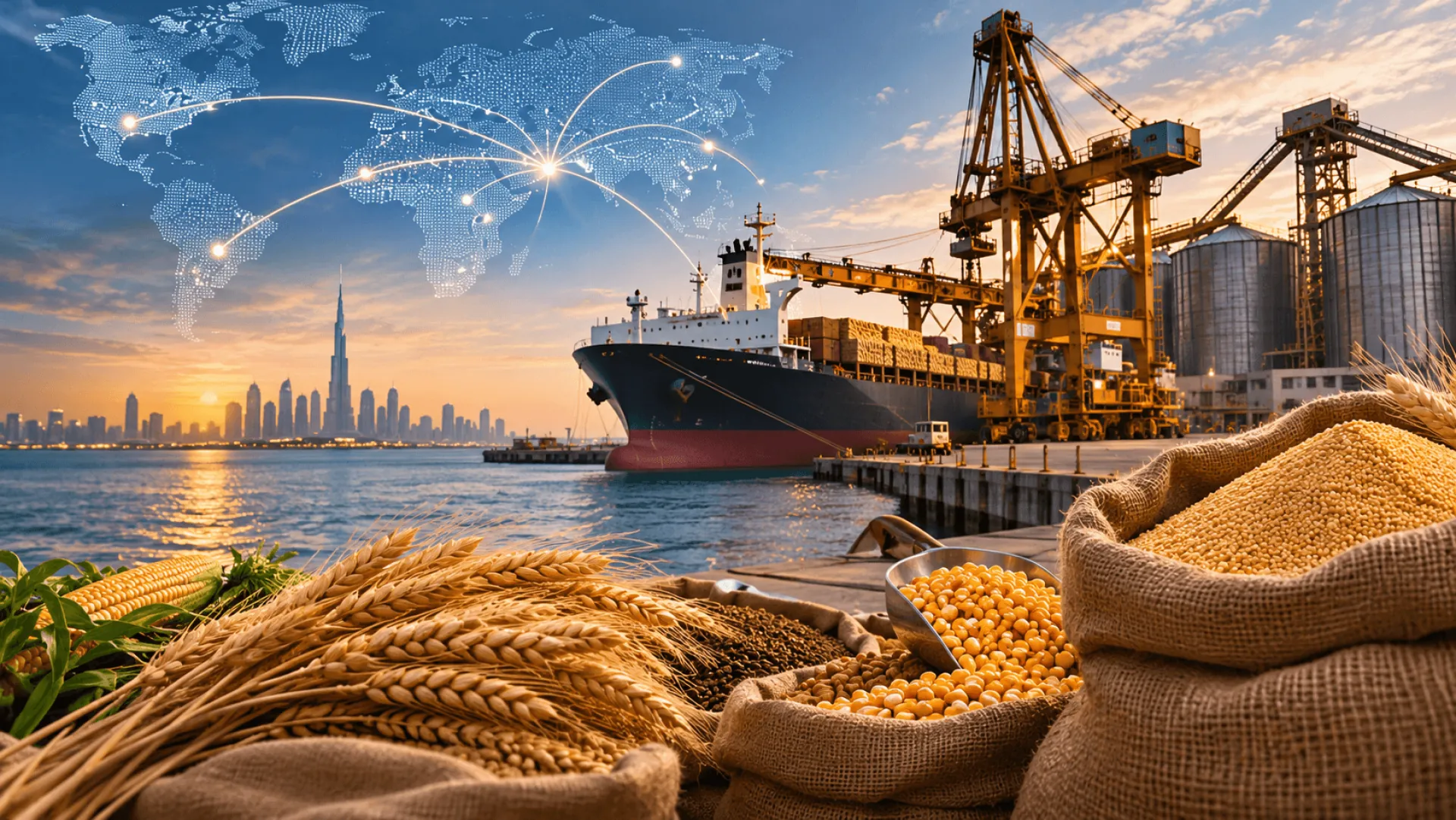

What Is the World's Most Important Agricultural Commodity?
What would happen if the world suddenly lost access to one of its most essential agricultural commodities?
Would global food prices skyrocket? Would international trade collapse? Could a single crop shortage change diplomatic relationships between countries?
The answers depend on which commodity disappears.
Some agricultural products feed billions of people directly. Others support enormous livestock industries, power manufacturing supply chains, or provide essential export revenues to entire economies.
In 2026, international agricultural markets remain deeply connected to geopolitics, climate change, economic development, and global trade.
But which agricultural commodity truly matters the most?
To answer that question, we examined ten major agricultural products based on four criteria: food security, international trade significance, economic importance, and geopolitical influence.
Production volume alone does not determine the winner. A commodity produced in smaller quantities may carry greater strategic importance if millions of people depend on international supplies.
Our countdown begins with an agricultural product that supports a multibillion-dollar global industry—and ends with a surprising contest between two of the world's most influential crops.
10. Cocoa: A Small Crop With Extraordinary Economic Influence
Major producers: Côte d'Ivoire, Ghana, Ecuador, Nigeria
Cocoa may not feed the world, but it provides a powerful example of how geographical concentration can shape international commodity markets.
Much of the world's cocoa is produced in West Africa, particularly Côte d'Ivoire and Ghana.
This means that weather conditions, agricultural diseases, and production challenges in a relatively small region can significantly affect the international chocolate industry.
Cocoa prices experienced extraordinary volatility during 2024 and 2025, demonstrating how supply disruptions can influence manufacturers and consumers worldwide.
Although cocoa ranks tenth because of its limited contribution to essential nutrition, its importance to agricultural export economies and international food manufacturing should not be underestimated.
The strategic factor: A geographically concentrated supply chain serving a major global consumer industry.
9. Cotton: The Crop That Keeps the Fashion Industry Moving
Major producers: China, India, Brazil, United States
Cotton is one of the clearest reminders that agricultural commodities are not exclusively about food.
The global textile and clothing industries depend heavily on natural fibres, with cotton remaining an important raw material.
Its production connects farmers in the Americas and Asia with textile factories, international clothing brands, and consumers worldwide.
Cotton also carries geopolitical significance.
Trade restrictions, manufacturing policies, sustainability requirements, and international labour standards can all influence cotton supply chains.
Unlike synthetic fibres, cotton production depends directly on agricultural conditions, making it vulnerable to drought, water shortages, and changes in cultivation costs.
The strategic factor: Cotton connects agriculture to one of the world's largest manufacturing and consumer industries.
8. Coffee: The Commodity That Connects Continents
Major producers: Brazil, Vietnam, Colombia, Indonesia
Few agricultural commodities have achieved the global cultural and commercial importance of coffee.
Millions of consumers begin their day with a product originating from agricultural regions thousands of kilometres away.
Behind every cup lies an international supply chain involving farmers, exporters, shipping companies, processors, roasters, retailers, and distributors.
Coffee is particularly important to agricultural economies in Latin America, Africa, and Asia, where production generates employment and foreign exchange earnings.
However, coffee markets are highly sensitive to environmental conditions.
Droughts, frosts, and changing rainfall patterns in major producing countries can affect prices across international markets.
Coffee ranks eighth because its importance comes primarily from trade, employment, and economic activity rather than essential food security.
The strategic factor: A highly internationalised consumer market supporting agricultural export economies.
7. Sugar: Where Agricultural Markets Meet Energy Markets
Major producers: Brazil, India, Thailand, China
Sugar occupies an unusual position in the agricultural economy.
It is both a major food manufacturing ingredient and a raw material for biofuel production.
Brazil demonstrates this connection particularly clearly.
Brazilian sugarcane processors can allocate production between sugar and ethanol, depending on market conditions and commercial incentives.
Consequently, changes in energy prices and biofuel policies can influence agricultural supply decisions.
Sugar markets are also sensitive to government interventions, weather conditions, and export restrictions.
Its combination of industrial significance, international trade, and energy-market connections earns it seventh place.
The strategic factor: Sugar links food manufacturing with renewable fuel production and international energy economics.
6. Chicken Meat: The Protein Supporting Global Food Demand
Major producers: United States, China, Brazil, European Union
Chicken meat is one of the world's most important animal protein commodities.
Its significance extends beyond the poultry industry because chicken production depends heavily on agricultural feed ingredients, particularly corn and soybean meal.
This creates a direct relationship between international grain markets and global animal protein production.
When feed costs increase, poultry producers can face higher operating expenses, potentially influencing consumer meat prices.
Brazil and the United States are major international exporters, while numerous countries rely on domestic and imported poultry to meet protein demand.
Disease outbreaks and sanitary trade restrictions can also interrupt supplies.
Chicken meat ranks sixth because of its importance to food security and its close connection to grain markets.
The strategic factor: Affordable animal protein and strong interdependence with global feed commodity markets.
5. Palm Oil: The Ingredient Hidden Across the Global Economy
Major producers: Indonesia, Malaysia
Palm oil is one of the most versatile agricultural commodities in international trade.
It appears in cooking oils, packaged foods, personal care products, soaps, and various industrial applications.
Its significance comes not only from widespread consumption but also from concentrated production.
Indonesia and Malaysia account for the dominant share of global palm oil output.
This creates substantial dependence on Southeast Asian supply chains.
Changes in domestic export policies, environmental regulations, weather conditions, and production volumes can influence international vegetable oil markets.
Palm oil also plays an important role in biofuel production, increasing its exposure to energy and sustainability policies.
The strategic factor: Extensive industrial applications combined with geographical concentration of international supplies.
4. Soybeans: The Crop at the Centre of Major Trade Relationships
Major producers: Brazil, United States, Argentina, China
Soybeans are among the most strategically influential agricultural commodities because they connect global feed production, edible oils, and international trade policy.
Soybean processing produces two particularly valuable outputs: soybean meal and soybean oil.
Soybean meal is a critical component of livestock and poultry feed, while soybean oil supports food manufacturing and biofuel production.
Yet the most fascinating feature of the soybean market is its geopolitical structure.
Brazil and the United States are major exporters, while China is by far the most influential soybean importer.
This creates one of the world's most important agricultural trading relationships.
Changes in tariffs, diplomatic relations, or Chinese purchasing decisions can redirect trade flows between competing exporters.
Soybeans rank fourth because of their influence over animal protein supply chains and their significance in international economic relations.
The strategic factor: A critical global feed ingredient and a major component of trade relationships between China and the Americas.
3. Rice: The Crop That Feeds Some of the World's Largest Populations
Major producers: China, India, Bangladesh, Indonesia, Vietnam
Rice occupies a unique position in global food security.
For billions of people, particularly across Asia, rice is an everyday dietary staple.
Unlike commodities primarily used for animal feed or industrial processing, the majority of rice consumption is directly connected to human nutrition.
This makes rice markets politically sensitive.
A sudden increase in rice prices can directly affect household food expenditure, particularly in lower-income communities.
The structure of international rice trade creates another vulnerability: only a relatively small share of global production is traded internationally.
Major rice-producing countries consume substantial portions of their harvests domestically.
When exporters introduce restrictions to protect domestic supplies, importing nations may encounter immediate difficulties.
India's earlier rice export restrictions demonstrated how national food security decisions can influence international prices and buying behaviour.
Rice earns third place because of its enormous importance to human nutrition, although a relatively limited internationally traded share reduces its trade exposure compared with some other major commodities.
The strategic factor: Essential food security for billions of consumers and high sensitivity to government export policies.
2. Corn (Maize): The World's Agricultural Powerhouse
Major producers: United States, China, Brazil, Argentina
Corn has an exceptionally strong claim to being the world's most important agricultural commodity.
In fact, if agricultural importance were measured primarily by production volume and industrial versatility, corn would deserve first place.
According to USDA data, global corn production in the 2025/26 marketing year reached approximately 1.33 billion metric tonnes, significantly exceeding global wheat production.
But volume is only part of the story.
Corn has three major economic functions.
First, it is a significant food crop, particularly in regions where maize-based products are dietary staples.
Second, corn is one of the world's most important livestock feed ingredients, making it essential to poultry, pork, beef, and dairy production.
Third, corn supports ethanol production and numerous industrial applications.
This means that a major disruption in corn production could influence several industries simultaneously.
The United States, Brazil, and Argentina are especially important to international corn exports, while China represents a major production and consumption market.
Corn also connects agriculture with global energy economics through biofuel production.
So why does it rank second rather than first?
Because industrial versatility and total production are not the only measures of strategic importance.
Corn is indispensable to global agricultural supply chains. However, much of its consumption is indirect, particularly through livestock production and industrial processing.
The commodity occupying first place plays a particularly significant role in direct human nutrition, international food dependence, and geopolitical relationships.
The strategic factor: The scale and versatility of corn make it one of the world's most economically interconnected agricultural commodities.
1. Wheat: The World's Most Strategically Important Agricultural Commodity
Major producers: European Union, China, India, Russia, United States
Wheat takes first place, not because it is produced in the greatest quantities, but because of its exceptional combination of food security importance, international trade dependence, and geopolitical influence.
According to the USDA, global wheat production reached approximately 844 million metric tonnes during the 2025/26 marketing year.
That is substantially less than global corn production.
However, wheat's strategic importance becomes clearer when examining how it is consumed and traded.
Wheat Is Primarily a Human Food Commodity
Wheat is fundamental to bread, flour, pasta, noodles, and many other staple foods.
OECD-FAO projections indicate that approximately two-thirds of global wheat consumption is used directly for food.
This distinguishes wheat from corn, where animal feed and industrial applications account for much larger shares of consumption.
For many countries, maintaining wheat supplies is directly connected to the affordability of essential foods.
Wheat Creates Significant International Dependence
Another crucial difference is the structure of international wheat trade.
China and India are among the largest producers, but much of their wheat supports domestic consumption.
Meanwhile, Russia, the European Union, Canada, Australia, and the United States supply major international markets.
Importing countries across North Africa, the Middle East, and parts of Asia depend on these exporters to help meet domestic demand.
This creates relationships that extend beyond ordinary commercial transactions.
Wheat Has Demonstrated Geopolitical Influence
Russia's position as a leading wheat exporter demonstrates the strategic importance of agricultural trade.
Countries such as Egypt purchase substantial quantities of wheat from international suppliers, creating economic relationships that governments have strong incentives to maintain.
The conflict in Ukraine has further exposed the vulnerability of international wheat supply chains.
Disruptions to Black Sea shipping have affected transportation costs, trade routes, and food security concerns in importing markets.
Few agricultural commodities illustrate the relationship between international trade, national security, and diplomacy as clearly as wheat.
Wheat Prices Can Become Politically Sensitive
For governments managing subsidised bread programmes or high dependence on imported grain, wheat price increases can have direct consequences for public expenditure and consumer purchasing power.
This makes reliable wheat procurement an important component of economic stability.
The significance of wheat is therefore not limited to its commercial value.
It is an agricultural commodity closely connected to governments' ability to maintain affordable food supplies.
Why wheat takes first place: Its exceptional importance to human nutrition, substantial international trade, concentrated export availability, and demonstrated geopolitical sensitivity make it the strongest candidate for the world's most strategically important agricultural commodity.
What This Ranking Reveals About Global Agricultural Trade
The most striking conclusion from this ranking is that agricultural importance cannot be measured through production volume alone.
Corn dominates in scale and industrial versatility. Soybeans support international livestock production and major economic relationships. Rice provides essential nutrition to enormous populations.
Meanwhile, commodities such as palm oil, coffee, cocoa, and cotton show how agriculture supports manufacturing, international employment, and export earnings.
But wheat stands apart because it combines essential human consumption with a particularly significant role in international trade and geopolitical relationships.
For agricultural trading companies, the broader lesson is equally important.
Successful international commodity trading requires more than access to products. It demands an understanding of global production patterns, changing demand, political developments, transportation infrastructure, and supply chain risks.
Conclusion: Which Agricultural Commodity Matters Most?
Every commodity in this ranking contributes to the global economy in a different way.
Some feed populations, others support industries, and several influence international diplomatic and commercial relationships.
Corn may be the most versatile major agricultural crop. Rice may be the most indispensable staple in parts of Asia. Soybeans may underpin some of the world's most important agricultural trading relationships.
Yet when food security, international trade dependence, economic stability, and geopolitical sensitivity are considered together, wheat emerges as the strongest candidate for first place.
Because the true importance of an agricultural commodity is not simply how much the world produces, but how deeply the world depends on it.


